The LIVED Method
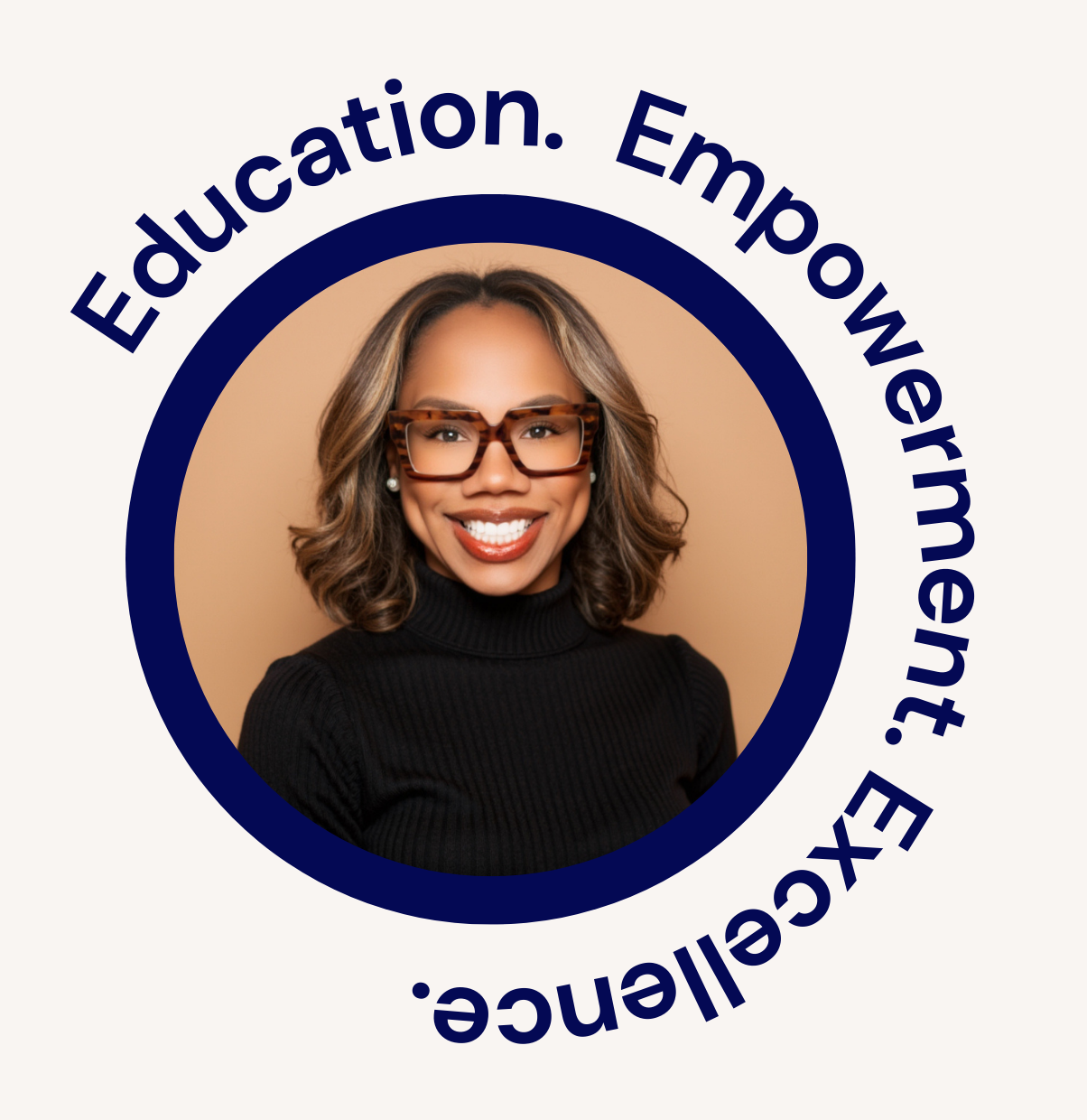
Created by Dr. Tempestt S. Latham
Health information only works when it fits people’s lives.
Many community programs share accurate, well-meaning information. Yet people often leave without the understanding or confidence to act on it. The gap isn’t in the facts. It’s in how the information connects to people’s real lives.
Why The “LIVED” Method
Much of the strongest health work in our communities began with lived experience: people who saw a need firsthand and stepped up to meet it. The LIVED Method honors that. It is built on the belief that the people we serve are experts in their own lives, and that health education should start there.t helps
LIVED gives community organizations the structure to turn passion into programs that meet their goals and keep improving. It’s made for nonprofits, community health programs, faith-based groups, schools and healthcare teams, and you don’t need a public health degree to use it.and adult learning principles together in five practical steps
How it helps
The LIVED Method gives community organizations the structure to turn passion into programs that meet their goals and keep improving. It’s made for nonprofits, community health programs, faith-based groups, schools healthcare teams, and you don’t need a public health degree to use it.
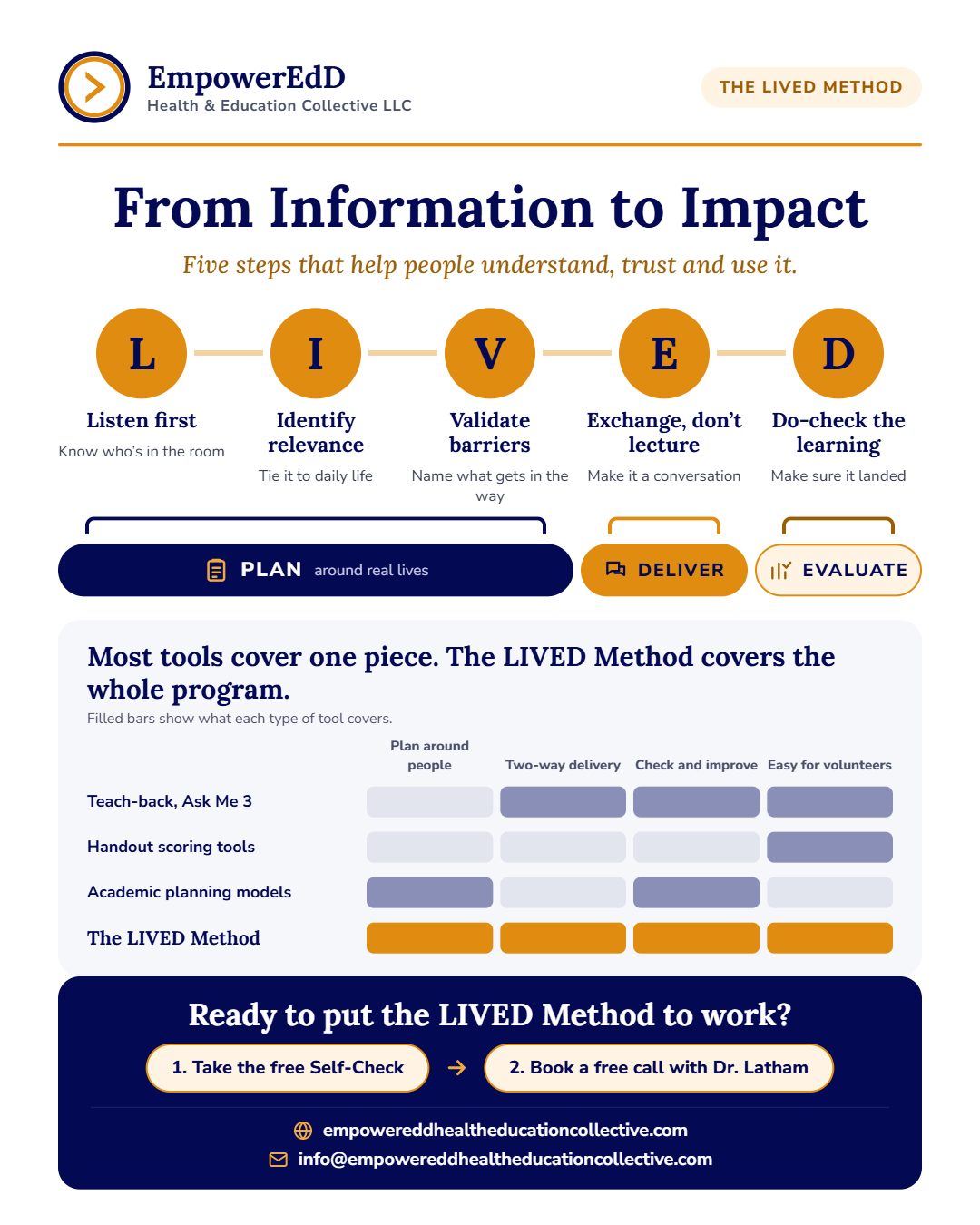
The LIVED Method’s 5 Steps
-
Effective health education starts with the people it’s meant to serve. Listening first means involving community members early in planning, and learning what participants already know, believe and have experienced before teaching begins. When programs are built on community voice, they earn trust from the start.
-
Description text goes herePeople act on information that connects to their daily lives. This step aligns program goals, content and examples with the real priorities, cultures and experiences of the community. When participants see why information matters to them, they’re more likely to engage, remember and use it.
-
Knowing what to do isn’t always enough. Cost, time, transportation, access, language and past experiences with care can all stand in the way. This step assesses those challenges during planning, builds strategies to address them into the program design, and meets participants with options that work within their realities, without judgment.
-
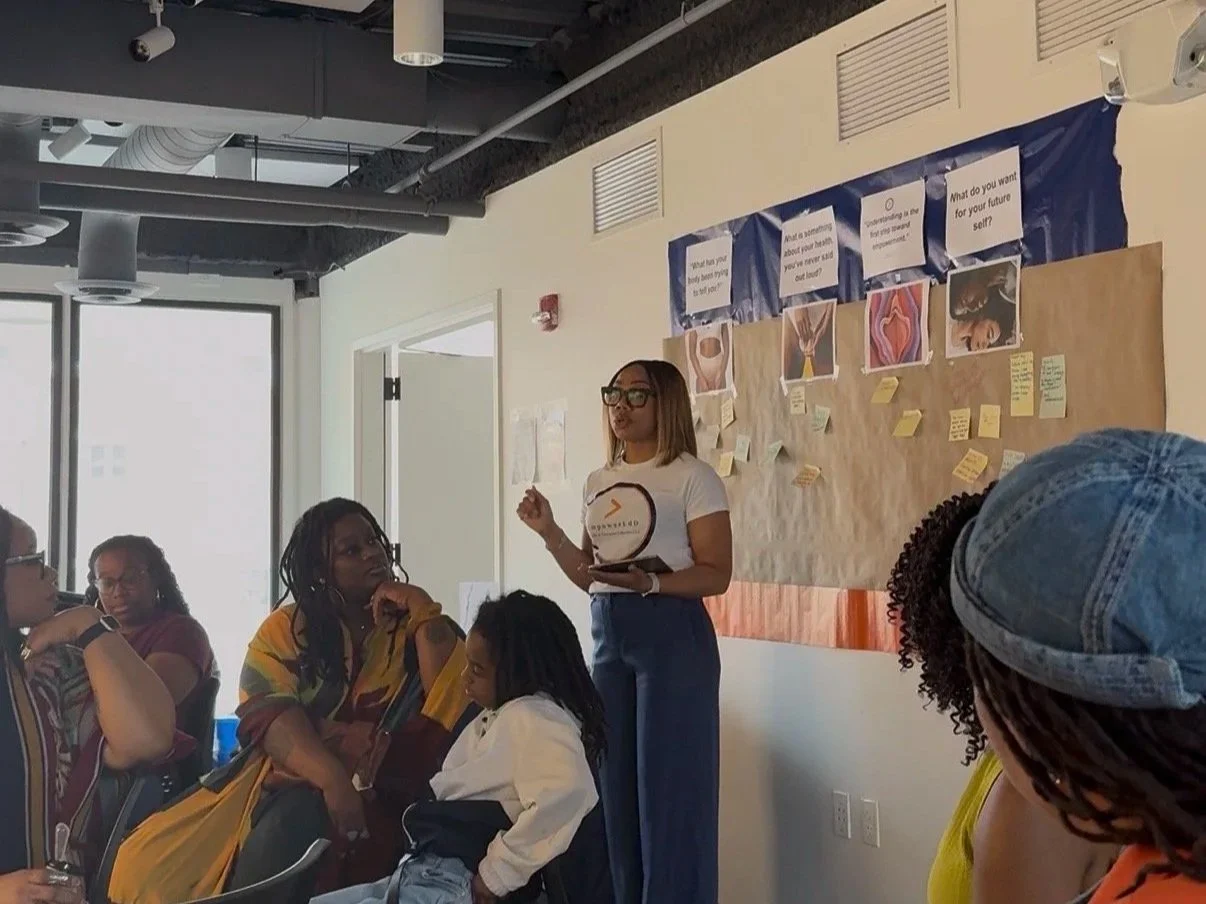
Learning happens through conversation, not one-way presentations. This step designs programs with built-in opportunities for dialogue, demonstration and practice, delivered in layman’s terms by facilitators who are trained to engage. When participants can ask, share and try, information becomes understanding.tem description
-
Item descriptionSharing information isn’t the finish line. Confirming it resonated is. This step builds in ways to check understanding, such as teach-back, and uses evaluation data and participant feedback to strengthen the program over time. It keeps programs accountable, improving and ready to show results.
“When we plan with purpose, deliver with connection and evaluate with honesty, health education stops being information and starts being impact.”
— Dr. Latham
The LIVED Method Testimonials
-
“The content was very clear and easy to understand. I enjoyed learning about the LIVED framework.”
Recent Client
-
“Great module to put into practice. This can be used in so many areas of public health like hospitals, clinics etc.
Recent Client
-
“I appreciated the emphasis on person-centered health education and the practical application of the LIVED framework. "
Recent Client
-
Yes. You don’t need to start from scratch. The LIVED Method can be used to review and strengthen an existing program, curriculum or training. The Self-Check shows which steps are already in place and where to focus first. Many organizations start with a Program Review to find quick improvements before their next program cycle.
-
It’s for anyone who plans, funds or delivers health education. That includes nonprofits, community and faith-based organizations, schools, public health departments and healthcare teams. Program leaders use it to design and evaluate programs, and educators use it to strengthen how they teach.
-
Yes. The LIVED Method isn’t tied to one condition or audience. Whether your program focuses on chronic disease, mental health, oral health, nutrition or prevention, the five steps help make the information relevant and usable for the people you serve.
-
Yes, we remain actively involved until solutions are fully operational and staff are confident.
-
Most tools focus on one piece of the work, like reviewing a handout or checking a single conversation. The LIVED Method supports the whole program and everyone who shapes it. Program leaders and grant writers use it to plan, budget and evaluate programs built around the community. Educators and facilitators use it to connect with participants, address barriers and confirm understanding in every session. With one shared framework and matching Self-Checks for each role, everyone works toward the same goal: health information people can understand, trust and use.
FAQ
Ready to Put the LIVED Method to Work?
Whether you’re planning a new program, applying for funding or looking to strengthen what you already offer, the LIVED Method helps your health education move from information to impact. Start with the free Self-Check to see where your program stands, then book a free 30-minute call with Dr. Latham to talk about your next step.
EmpowerEdD
e-Learning Series
Each course integrates existing knowledge, practical assignments, and evaluation metrics that collectively optimize skill retention.